
Foot cliffs
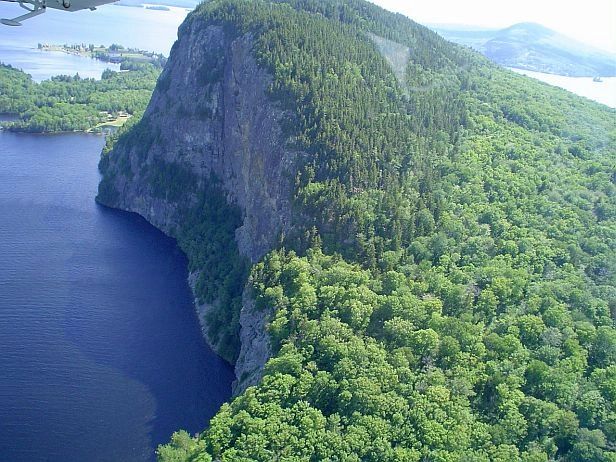
Maine's public lands guide describes Mount Kineo's sheer face as 700-foot cliffs forming the centerpiece of the Moosehead landscape.
Kineo history
The story of Kineo begins long before the lodge, and the best parts are stranger than a simple resort history.
The setting
Kineo's story is shaped by a rare cliff face, useful stone, a vast cold lake, and the people who crossed the water long before the first hotel opened.
Maine's public lands guide describes Mount Kineo's sheer face as 700-foot cliffs forming the centerpiece of the Moosehead landscape.
The same guide notes that most summer visitors reach Mount Kineo State Park by commercial boat shuttle from Rockwood.
Oak Lodge is listed in public Cottage Row summaries as a 1912 building within the Kineo Cottage Row Historic District.
Timeline
From glacial bedrock to resort cottages, Kineo's history is layered, dramatic, and still visible along the shore.
Maine's guide describes a mile-thick ice sheet scouring the Moosehead region, leaving exposed bedrock and the deep lake basin. Mount Kineo and Little Kineo show the mark of that glacial movement.
Mount Kineo held mythic and practical significance for Wabanaki peoples such as the Penobscots. Flint-like felsite and rhyolite from the mountain were used for tools and traded through New England.
Moosehead Lake was a hub in traditional canoe routes connected to the Penobscot, Allagash, St. John, and Kennebec systems. Later, writers, naturalists, sportsmen, and rusticators arrived by road, rail, and water.
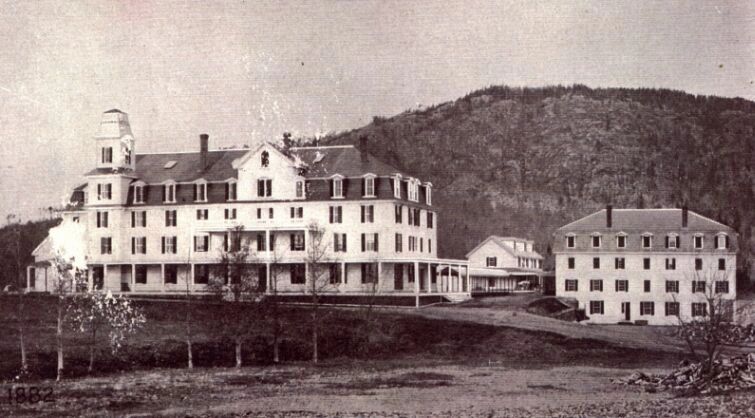
Public histories describe multiple Mount Kineo House buildings: an early hotel, fire, rebuilding, another fire, and a larger late nineteenth-century hotel that came to dominate the peninsula.
Resort managers developed private cottages along the western shore. These buildings linked wealthy seasonal life to the hotel, golf course, lake approaches, and surrounding mountain views.
Oak Lodge was built on the site of a former sporting clubhouse. The National Register record describes it as the last of the seven Cottage Row buildings, with eight second-floor bedrooms across its original paired plan.
The old hotel world faded through economic change, demolition, and fire. Surviving structures like Oak Lodge, the golf course, The Breakwater, and Cottage Row became the physical memory of the resort.
The strange richness
Its cliff face is the obvious landmark, but the deeper history is layered: glacial force, Wabanaki tool stone, lake routes, Thoreau-era fascination, resort ambition, private cottages, fire, abandonment, and preservation.
Those layers are what make The Oak Lodge more than a house with a view. It stands among the remnants of a place that has been quarried, traveled, celebrated, rebuilt, burned, and remembered.
Further reading
These public references offer useful background on Moosehead Lake, Mount Kineo, Cottage Row, and the structures that survived the resort era.
Public lands access, Kineo trails, cliffs, glacial context, Wabanaki rhyolite, canoe routes, and safety notes.
Background on Cottage Row, Oak Lodge, resort-era cottages, and the National Register listing.
Context for another surviving Kineo resort-era structure and the architectural world around the old hotel.
Family materials, book research, and local memory continue to shape the story of the lodge.